
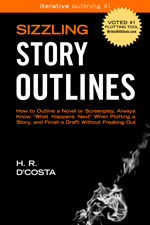
Are you tired of getting stuck in the middle of writing? Learn how to keep your story moving with Sizzling Story Outlines, which was voted #1 Plotting Tool by WritesWithTools.com.
Whether you’re a plotter or a pantser, it’ll show you how to make outlining work for you. It’s a must-read craft book if you want to:
“If you want a proven nuts-and-bolts method to get your stories told, trust this guide.” ~ Ronald Drescher, screenwriter of The Inventors, a ScreenCraft Quarterfinalist
Buy now, unleash the full power of outlining, and finish your draft without freaking out!
In David Fincher’s The Social Network , the creation of Facebook is not portrayed as a triumph of connection, but as a byproduct of social exclusion and ruthless ambition. Through Aaron Sorkin’s sharp, staccato dialogue and Jesse Eisenberg’s portrayal of Mark Zuckerberg, the film explores the irony of a man who builds the world's largest social network while remaining fundamentally disconnected from the people around him. The Irony of Connection
The Social Network is less a biography of a billionaire and more a modern tragedy about the loneliness at the top. It captures a pivotal moment in cultural history where social status shifted from "who you know" to "what you’ve built." Ultimately, the film leaves us with the image of Zuckerberg—the youngest billionaire in history—sitting alone, repeatedly refreshing a profile page, proving that digital connectivity is a poor substitute for genuine human intimacy. subtitle The.Social.Network.2010.UHD.BluRay.216...
The Architecture of Ambition: A Review of The Social Network In David Fincher’s The Social Network , the
The narrative is framed by two concurrent lawsuits: one from the Winklevoss twins, who claim Zuckerberg stole their idea, and another from Saverin, who was pushed out of the company. These legal battles highlight the murky ethics of the digital age. The film posits that in the world of high-stakes tech, an idea is only as valuable as the person capable of executing it. Zuckerberg’s relentless focus on the product’s growth justifies, in his mind, the collateral damage to his friendships and reputation. Conclusion It captures a pivotal moment in cultural history